
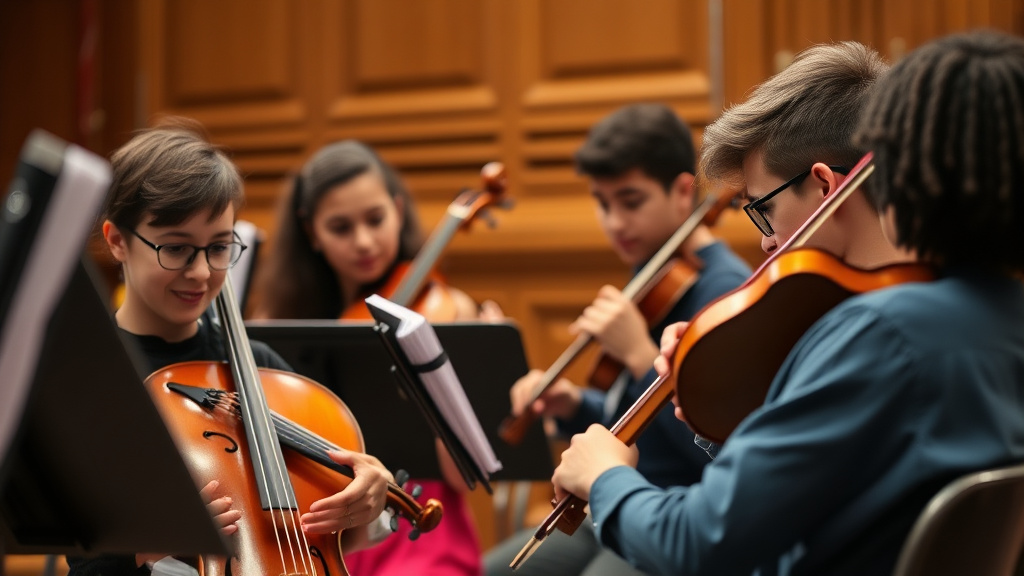
For years, classical music education remained largely inaccessible to low-income urban youth, creating a substantial cultural and educational divide. However, a growing movement of forward-thinking programs is breaking down these barriers, bringing orchestras, music lessons, and music theory instruction directly to disadvantaged neighborhoods. This article investigates how passionate institutions are transforming lives through classical music, analyzing the expansion of these programs, their documented effects on student success, and the remarkable ways music education is transforming opportunities for disadvantaged young people across urban centers across America.
Removing Obstacles Through Music Training
Classical music education has historically functioned as a avenue for cultural enrichment and academic excellence, yet stayed largely confined to wealthy neighborhoods with capacity for private instruction and access to instruments. Urban students from low-income families encountered insurmountable barriers, such as prohibitive costs, inadequate educational budgets, and geographical distance from performance venues. This inequality reinforced cycles of inequality, denying gifted student musicians the chance to cultivate their abilities. Acknowledging this inequity, music educators and funding bodies have stepped forward to expand access to classical music instruction, providing enriching educational experiences open to all students.
Today’s innovative programs employ varied approaches to address conventional barriers, from providing complimentary instruments and lessons to offering meals and transportation alongside lessons. These efforts recognize that talent is universal, regardless of socioeconomic status, and that music education can serve as a powerful catalyst for individual growth. By weaving music programs within cultural organizations, schools, and community spaces, these programs connect with students in accessible locations. The outcomes have been impressive, with students involved exhibiting enhanced academic achievement, improved social competencies, and greater belief in their capabilities.
The development of classical music education programs constitutes more than charitable outreach; it reflects a core transformation in how communities prioritize and support young people’s development. These programs acknowledge that music education develops critical thinking, discipline, and emotional intelligence—skills essential for success in all academic disciplines and personal endeavors. By reducing economic and practical constraints, programs ensure that economic circumstances no longer dictate whether a student can pursue musical excellence. This democratization of classical music creates pathways to success historically denied to urban youth.
Program Development and Community Engagement
Over the past decade, classical music education programs have grown rapidly across large U.S. metropolitan areas, reaching thousands of previously underserved students. Organizations like El Sistema-based initiatives have created musical ensembles in neighborhoods where instruments were once unimaginable luxuries. These programs partner with schools, community centers, and local governments to develop sustainable, extensive music education frameworks. The nationwide expansion reflects increasing acknowledgment that classical music education warrants equal priority in line with traditional academic subjects in urban educational landscapes.
Community impact reaches much further than individual student achievement, as these programs build stronger communities and promote community unity. When young musicians collaborate in orchestras, they cultivate teamwork abilities and mutual respect between individuals from varied communities. Public concerts and community events highlight student abilities, fostering pride and investment in community youth programs. Schools and neighborhoods gain from enhanced cultural richness, enhanced school climate, and improved ties between educational institutions and their surrounding communities.
Overcoming Systemic Obstacles
Successful programs address multiple systemic barriers simultaneously, understanding that access necessitates comprehensive support separate from music instruction alone. Many provide free instruments, eliminating the financial burden that traditionally blocked low-income families from taking up classical music. Transportation assistance enables students can attend lessons and rehearsals regardless of neighborhood location. Meals and mentorship programs address broader needs, recognizing that hungry, unsupported students cannot fully connect with their education.
Cultural and psychological barriers get the same focus, as many urban students have limited experience with classical music and may initially find daunting unfamiliar traditions. Skilled instructors create welcoming, affirming environments where students sense appreciation and motivated to explore new possibilities. These programs celebrate diverse musical backgrounds while presenting classical music, enabling participants to view classical music as relevant and accessible rather than exclusive or elitist. This culturally informed method has proven crucial to building genuine engagement and long-term commitment among participants.
Community Initiatives Driving Change
Local Initiatives Revitalize Urban Communities
Local nonprofits are driving remarkable transformations in metropolitan areas by establishing inclusive orchestral training programs. These grassroots initiatives work alongside local schools, community centers, and libraries to offer accessible training to economically disadvantaged youth. By eliminating cost obstacles and bringing professional musicians into underserved areas, these programs show that formal music instruction succeeds beyond exclusive academies. Organizations like El Sistema-inspired programs have developed vibrant musical communities where young musicians find their voice through orchestral training and ensemble participation.
The success of these grassroots efforts lies in their established community relationships and culturally responsive approaches. Grassroots organizations understand the unique challenges affecting urban youth and create initiatives that address their individual circumstances and contexts. Many programs deliver flexible timing, transportation assistance, and support paired with musical instruction. This comprehensive support system ensures that students can continue their participation and develop meaningful relationships with instructors. Teachers skilled in both classical music and community outreach establish inclusive spaces where every student experiences recognition and capable of achieving musical excellence.
Financial structures for these programs have evolved to include grants, corporate sponsorships, and philanthropic support. Community leaders have strongly pushed for continued financial support in music education as a critical component of youth development. Many programs establish relationships with professional orchestras, universities, and music schools to gain knowledge and materials. This partnership model maximizes impact while sharing financial burden across multiple stakeholders, making classical music education increasingly sustainable in urban communities across the nation.
Success Stories from Students and Student Feedback
Individual student accomplishments powerfully illustrate the profound effect of inclusive classical music education. Young musicians who began with no musical background have advanced to perform in local orchestral groups, earn music scholarships to top-tier universities, and encourage those around them. These accounts reveal how classical music education builds confidence, discipline, and scholarly performance outside music class. Students regularly describe improved focus, better critical thinking, and deeper bonds to their schools and communities through their musical journeys.
Teachers and guardians highlight the holistic benefits they observe in participating students. Beyond technical skill, young people demonstrate increased self-esteem, improved social skills, and greater academic engagement in all areas of study. Numerous pupils credit their music teachers with offering guidance and support that went well past technical instruction. These individual stories underscore how music training in classical styles serves as a significant driver for individual growth and social mobility among disadvantaged young people in cities.
Infrastructure and Resource Development
Expanding classical music programs necessitates substantial funding in facility development and instructional tools. Local groups have successfully renovated abandoned buildings into musical education centers, equipped practice rooms with high-grade equipment, and established virtual education programs for online teaching. Strategic resource allocation guarantees that participants obtain access to the identical professional-grade equipment and supplies provided in affluent private academies. This infrastructure development demonstrates a commitment to lasting viability and fair distribution.
Technology adoption has revolutionized how programs deliver music instruction in classical genres in under-resourced environments. Online lessons, virtual ensemble rehearsals, and online music collections expand educational access beyond physical classroom walls. Programs integrate traditional in-person instruction with cutting-edge technology solutions to improve student involvement and accessibility. This hybrid approach has proven particularly valuable for learners facing scheduling difficulties or mobility limitations, democratizing access to elite music education.
Implications and Growth Trajectory
Quantifiable Outcomes and Academic Success
The influence of extended classical music programs reaches well past the concert hall. Students taking part in these initiatives show substantial progress in academic performance, with studies revealing improved mental development and higher graduation rates. Research suggests that young musicians exhibit stronger problem-solving skills, enhanced self-discipline, and greater emotional intelligence. Furthermore, these programs foster a feeling of community and community pride among participants, generating lasting positive effects that shape their educational trajectories and growth throughout their formative years.
Beyond academics, students acquire invaluable practical abilities through intensive music instruction. The commitment needed to master an instrument builds resilience and determination, qualities essential for navigating life’s obstacles. Many participants report increased confidence and self-esteem, alongside newfound aspirations for their futures. Teachers and instructors in these settings serve as examples to follow, illustrating the profound impact of dedication and enthusiasm. These personal victories often encourage peers and family members, generating lasting influence throughout broader communities and positioning music as a catalyst for meaningful change.
Expansion Plans and Future Direction
Looking ahead, classical music education programs are poised for substantial growth in metropolitan areas throughout the nation. Financial support efforts from government and private funding sources remain on the rise, allowing groups to connect with additional learners and create lasting music schools in areas with limited access. Collaborative relationships with schools, community centers, and cultural institutions are strengthening infrastructure and sustainability. Program leaders imagine a time ahead where all motivated learners, independent of financial background, has availability of premier classical music training and performance chances.
The long-term vision involves creating pathways for gifted young people to develop careers in professional music. Mentoring initiatives connecting young musicians with prestigious orchestras and music conservatories are unlocking access previously closed to students from low-income backgrounds. As these programs mature and demonstrate their effectiveness, they’re gaining more charitable funding and government recognition. This growing interest suggests that classical music instruction will steadily be considered as an essential component of comprehensive urban education, ensuring that skill and commitment, rather than economic status, determine who gets to experience the profound impact of classical music.
