
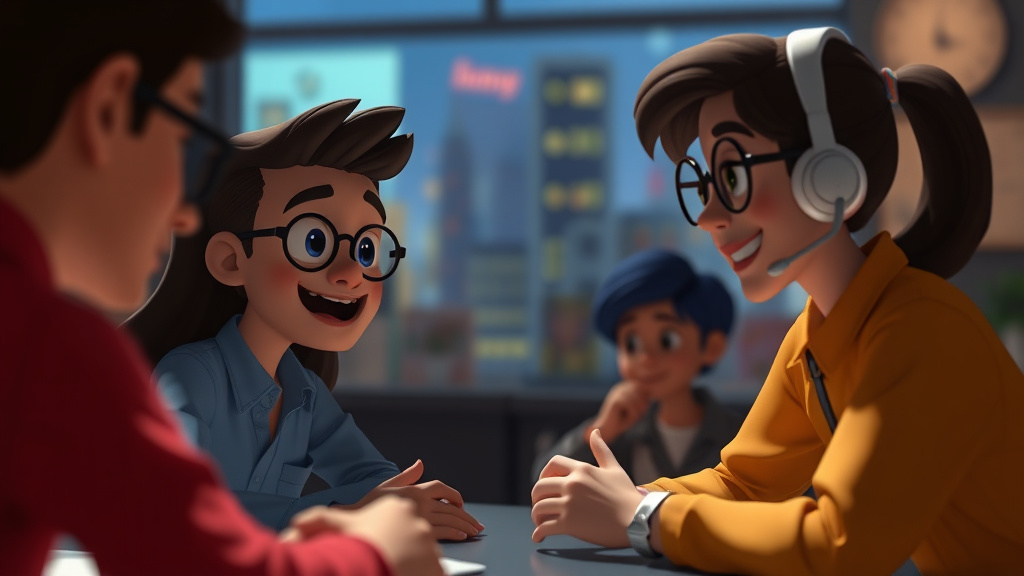
The animation industry is experiencing a creative revolution as production companies leverage advanced tools to reinvent storytelling itself. From AI-driven character design to immersive virtual production settings, animators are shattering established narrative structures and investigating bold new artistic directions. This article explores how leading studios are utilizing cutting-edge approaches—including instantaneous rendering, algorithmic animation, and audience-driven narratives—to attract audiences and push the medium’s creative limits. Learn about the innovative solutions and innovative methods reshaping animation’s future.
Challenging Classic Narrative Structures
Digital animation studios are fundamentally reimagining how stories unfold on screen by moving away from three-act structures and straightforward narratives. Modern animation creators experiment with broken chronologies, simultaneous storylines, and self-referential approaches that challenge viewer expectations. These innovative approaches leverage animation’s unique capacity to depict intricate time connections and intangible ideas, crafting tales that appear novel and thought-provoking while sustaining emotional impact with audiences seeking deeper engagement.
The shift toward non-traditional storytelling structures demonstrates wider shifts in culture in how audiences consume media and interpret data. Modern viewers, familiar with fragmented viewing patterns through social media and streaming platforms, more and more favor storytelling that mirrors their fractured lived experience. Animation studios take advantage of this zeitgeist by creating plots that encourage engaged watching, encourage interpretation, and encourage spectators to create understanding from deliberately disjointed sequences and enigmatic story arcs.
Non-Linear Story Structures
Non-linear storytelling in animation transcends simple flashback techniques, instead constructing intricate narrative frameworks where sequence and causality become adaptable artistic tools. Studios utilize backwards chronological order, intersecting timelines, and repeating narrative cycles that would be hard or unfeasible to execute in traditional live-action cinema. Animation’s inherent flexibility permits artists to effortlessly move between different temporal planes, viewpoint changes, and reality layers, enabling audiences to encounter narratives as complex, interconnected webs rather than linear progressions from opening to conclusion.
This method demands enhanced viewer participation and thoughtful interpretation, converting passive consumption into active interpretation. Digital tools permit animators to visualize sophisticated narrative structures with remarkable precision, using symbolic elements, color palettes, and spatial relationships to guide audiences through intricate narratives. By strategically withholding information and disclosing plot elements in unanticipated arrangements, studios generate compelling instances of realization that connect more meaningfully than traditional exposition-driven narratives.
- Reverse chronology uncovers character intentions through outcome-centered storytelling techniques
- Multiple concurrent storylines investigate different results from one crucial plot turning points
- Layered constructions establish multiple story layers for complex interpretation
- Broken narrative pieces demand engaged audience analysis and personal narrative construction
- Temporal collages condense various time periods into overlapping visual impressions
Technological Advances Supporting Creative Expression
Modern animation digital studios employ complex software systems and hardware systems that enable artists to achieve their most ambitious creative visions. Real-time rendering engines, cloud collaboration platforms, and advanced motion capture systems have expanded access to professional production capabilities. These technological foundations enable boutique studios to match industry giants while preserving creative integrity and creative direction over their projects.
The integration of hardware acceleration, advanced processing power, and accessible software interfaces has substantially transformed how animators approach their craft. Artists can now experiment with intricate visual effects, responsive lighting, and intricate character animations in real-time, substantially reducing iteration cycles. This technological advancement fosters a culture of experimentation where creative risks prove feasible, encouraging studios to pursue unconventional narratives and visual styles formerly limited by technical limitations.
AI and Deep Learning Integration
Machine learning and AI systems are revolutionizing animation production by streamlining routine processes and enhancing creative capabilities. These intelligent systems process large volumes of data of movement patterns, facial expressions, and scene dynamics to produce lifelike animated sequences that would traditionally require months of manual labor. Studios using AI-powered solutions demonstrate notable efficiency gains while preserving creative excellence, allowing creative teams to focus on creative direction and narrative advancement.
Machine learning models trained on diverse animation styles enable studios to create contextually appropriate movements and expressions that align with their artistic vision. Predictive algorithms support scene composition, lighting optimization, and color grading, providing intelligent suggestions that accelerate the creative process. Rather than replacing artists, these AI systems function as collaborative partners, boosting human creativity and enabling storytellers to create visually complex narratives under time constraints.
- Automatic intermediate frame creation minimizes manual animation labor substantially.
- Predictive movement systems boost natural movement performance.
- AI-powered asset libraries optimize production workflow productivity significantly.
- Machine learning facial recognition strengthens facial emotion authenticity.
- Intelligent render efficiency speeds up rendered result quality delivery.
Integrated Global Manufacturing Models
The animation industry has significantly changed through the adoption of collaborative global production models that unite creative talent across continents. Digital studios now orchestrate complex projects by leveraging distributed teams, each delivering specialized expertise from their respective regions. This distributed model not only expands the talent pool but also introduces diverse cultural perspectives that enrich storytelling. Studios like Disney and Pixar have effectively established international partnerships, combining the technical prowess of one region with the artistic sensibilities of another, resulting in more nuanced and globally resonant narratives.
These cooperative structures have become critical for current animation processes, allowing studios to streamline operations while maintaining creative excellence. By distributing workload across various global regions, development schedules accelerate significantly, allowing projects to progress around the clock. Cost savings result from strategic outsourcing to areas known for animation specialization, especially in character modeling, visual effects, and background design. Furthermore, this system encourages collaborative learning among cross-border groups, raising sector benchmarks and encouraging innovation as varied artistic perspectives converge and synthesize into revolutionary creative approaches.
Remote Teams and Remote Operations
Remote teamwork has revolutionized how animation studios work, allowing seamless coordination between dispersed creative teams without sacrificing quality or vision. Cloud infrastructure and instantaneous rendering technology allow animators to work simultaneously on identical projects, seeing updates instantaneously irrespective of geographical location. This move to digital processes has opened up animation production, allowing smaller studios to rival industry giants by accessing global creative resources. Advanced software solutions facilitate file versioning, resource organization, and collaborative editing, maintaining consistency across distributed production pipelines while upholding artistic integrity throughout creative stages.
The transition into remote work models has introduced unprecedented flexibility in animation production organization and team makeup. Studios can now assemble specialized crews for particular production stages, breaking up and rebuilding teams based on production requirements rather than maintaining permanent staff. This agility lowers operational expenses while enhancing creative output by combining the right talents for each production cycle. Virtual production environments facilitate live feedback sessions, allowing production leads to direct creative choices instantaneously, fostering collaborative problem-solving that accelerates iteration cycles and enhances final output quality significantly.
- Cloud-based asset libraries enable instant access to project resources worldwide.
- Live collaboration tools support simultaneous editing across multiple locations.
- Virtual production environments simulate traditional facilities with computational accuracy.
- Geographic distribution accelerates project timelines through continuous workflow progression.
- Digital communication platforms enhance team cohesion in spite of physical distance.
Audience Engagement Via Interactive Platforms
Digital animation studios are reshaping spectator participation by integrating engaging interactive technologies that convert stationary spectators into engaged collaborators. These forward-thinking methods leverage emerging technologies to produce interactive stories where audiences shape narrative conclusions, character arcs, and artistic presentation. By incorporating engagement features into animated content, studios foster more meaningful relationships and encourage community-driven storytelling experiences that extend far beyond conventional storytelling formats.
The shift toward engaging digital content constitutes a significant transformation in how animation companies approach audience engagement and how audiences consume content. Real-time rendering technologies enable viewers to explore animated worlds at their individual rhythm, finding hidden storylines and multiple story directions. This engagement framework simultaneously boosts viewer engagement and fulfillment but also creates meaningful performance data that inform subsequent creative direction and content development strategies throughout the sector.
Engaging Narratives and Cross-Platform Narratives
Transmedia storytelling has become a cornerstone method for digital animation studios aiming to maximize viewer engagement across different platforms and delivery channels. By developing linked stories that span animated series, interactive games, virtual reality experiences, and augmented reality applications, studios build expansive fictional worlds that reward exploration and continuous audience involvement. This diverse strategy allows users to interact with content in manners consistent with their preferences and technological capabilities.
Engaging interactive environments driven by virtual and augmented reality technologies constitute the frontier of viewer connection in animation. These systems allow viewers to explore animated worlds, interact with characters in live interaction, and shape story development through their decisions and interactions. Studios investing in immersive technologies document remarkable increases in audience loyalty and engagement metrics, positioning interactive experiences as essential components of contemporary animation production strategies and forward-thinking creative innovation.
- Virtual reality experiences transport audiences into richly detailed animated worlds
- Augmented reality applications blend animation with physical surroundings seamlessly
- On-demand interactive platforms allow viewers to shape story outcomes
- Story-driven gameplay integrates animation with interactive systems effectively
- Social media integration enables community participation in ongoing stories
